
Automotive / Marketing / Industry Trends
What Amazon Autos Means for Franchise and Independent Dealers
By Feyth Marketing ·
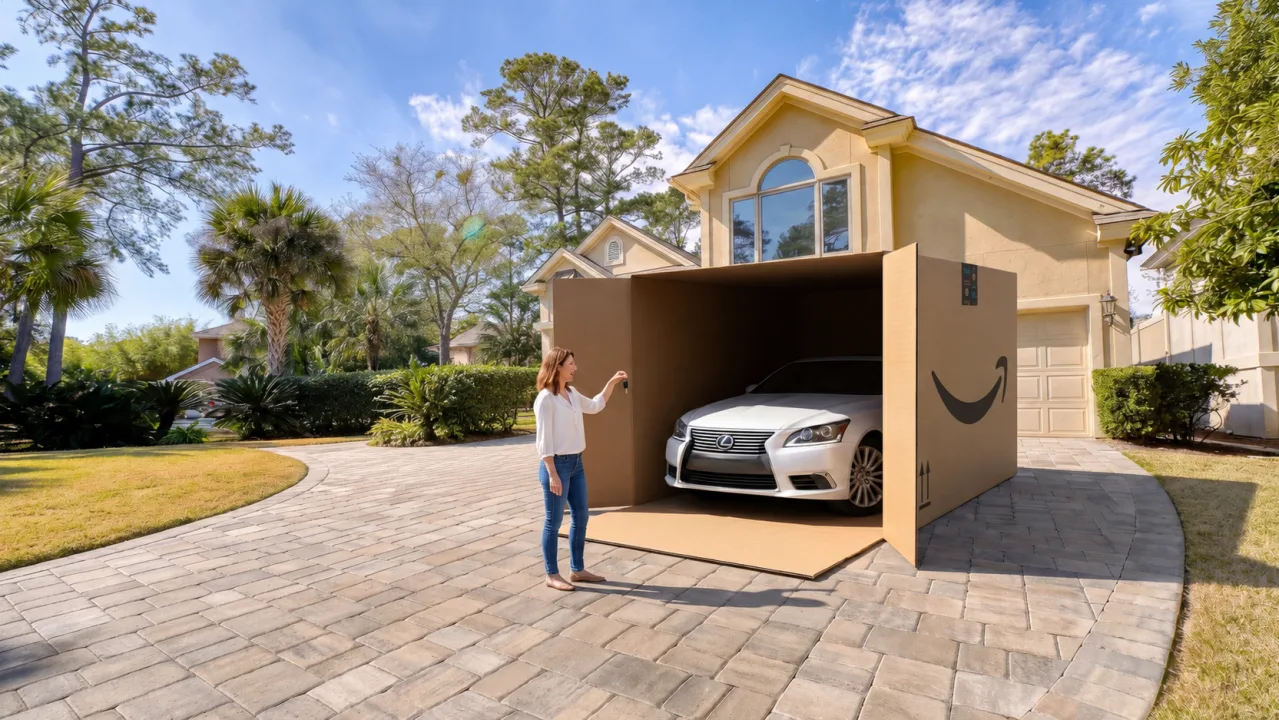
Amazon Autos now works with more than 1,000 dealers in over 130 U.S. cities. It lists new, used, and certified pre-owned vehicles from brands like Hyundai, Kia, Subaru, Mazda, Chevrolet, GMC, Cadillac, Jeep, Dodge, Ram, and Ford CPO, and Amazon says it's still expanding.
Some dealers see a threat and others see a free source of buyers, but both reactions skip the question that matters. What does this change about how your customers shop, and what do you need in place when they show up? Here is how the platform works, who it helps, and where to focus.
Amazon Autos is a dealer marketplace, not a dealer replacement
Amazon Autos lets dealers list their own inventory on Amazon. The dealer sets the price, keeps the vehicle, and hands it over at a local pickup, while Amazon supplies the audience, the checkout flow, and the financing and trade-in connections around the sale.
A shopper compares inventory, picks financing, leasing, or cash, adds protection products, gets trade-in information, and places a deposit. Most of the paperwork happens online, but the buyer still comes to your store for the handoff, any remaining signatures, and the test drive.
Used and CPO vehicles carry a minimum three-day/300-mile return policy and a minimum 30-day/1,000-mile limited warranty, subject to stated terms and state variation. Amazon has also partnered with ACV Auctions for trade-in values and lists lender integrations that include Ally, Chase, Ford Motor Credit, Hyundai Motor Finance, Santander, and Wells Fargo.
Why this is not another Carvana
Amazon Autos is a marketplace, so it doesn't carry the inventory, reconditioning, and delivery risk that nearly sank Carvana. Carvana owned or financed its cars, ran its own logistics, and took on heavy debt, and that model buckled once used-car values and interest rates turned.
The numbers show how hard the squeeze was. Carvana reported a $2.894 billion net loss in 2022, and its retail gross profit per vehicle dropped from $1,638 to $900.
It recovered, with $150 million of net income in 2023 and 596,641 retail units in 2025. Online car buying works, and the painful part was carrying a national inventory book on borrowed money.
Amazon keeps none of that on its balance sheet. You hold the inventory, the pricing, and the physical work, which is why Amazon can scale quickly and why it needs you to make the model work. It can't hand a buyer the keys without a dealership.
What it means for franchise dealers
For franchise stores, Amazon Autos is more likely to be a new acquisition channel than a threat. You keep the sale, the F&I process, the test drive, the trade-in inspection, and the service relationship, while Amazon handles top-of-funnel discovery and the digital paperwork.
There is early evidence that the exposure pays off, with a caveat. In an Amazon Ads case study, Amazon reported that for every Hyundai sold through Amazon Autos, more than ten additional Hyundais were bought at dealerships by people who had browsed Hyundai vehicles on the platform. That is Amazon's own data, so treat it as a sign of potential rather than proof.
The pressure point is pricing. The FTC's pricing transparency guidance says online advertised prices must reflect what the consumer can actually pay, including mandatory dealer fees other than required government charges.
Stores that advertise a low teaser price and recover margin through add-ons will look worse on a platform built for comparison. Stores with clean, all-in pricing will look better.
What it means for independent dealers
Independents get a bigger opportunity and a higher bar. Amazon's used and CPO expansion started with dealer-listed inventory, and NIADA reported that it began with used vehicles listed through Hyundai dealers in Los Angeles before widening out.
If you meet the eligibility requirements and keep a clean inventory feed, you could reach buyers who would never have found your lot.
The bar is what those buyers will expect afterward. Amazon normalizes upfront pricing, visible vehicle history, defined warranties, returns, digital financing, and quick online-to-pickup workflows, and shoppers will start to expect the same from you whether or not you list there.
If your website has vague pricing, stock photos, slow lead response, or no record of what you did to the car, you'll look weak next to an Amazon listing. The same goes for a small lot with no online credit prequalification.
Amazon can send you shoppers. Keeping them is up to you.
Amazon Autos, like Autotrader and Cars.com, is a rented channel. The platform controls the audience, the rules, the placement, and the data.
Ask dealers how they feel about third-party marketplaces and you'll hear the same frustrations. Many are tired of them, and the reasons are consistent:
- They control your lead flow. The platform decides who sees your inventory, where it appears, and how it ranks, and you don't get a say.
- Shoppers aren't loyal to you. A buyer who found you on a marketplace has no attachment to your store, so if another dealer's ad shows a better price, they click it immediately.
- Lead quality is uneven. Volume looks good in a report, but appointments and sales are what pay the bills, and marketplace leads often fall short there.
- The rates can change whenever the platform wants. You can build a budget around a channel and watch the cost move without any input from you.
- There's no fallback. When marketplaces are your main source of shoppers, you can't walk away when the terms get worse.
What to have in place before the traffic arrives
Think of each marketplace as the first introduction. These are the pieces that turn an introduction into a sale and a repeat customer:
- A fast, mobile-friendly website with accurate inventory and real photos of the exact vehicle
- Transparent, out-the-door pricing that matches what you advertise everywhere
- SEO and a strong Google Business Profile, so shoppers who search for a dealer in their area can find you directly and not just your listing
- CRM automation that logs every lead and assigns it instantly
- Email and SMS follow-up that starts within minutes and continues after the sale
- Paid search and retargeting that bring back shoppers who compared you and left
- Review generation that turns happy buyers into the proof the next shopper looks for
- Service-lane retention campaigns that bring customers back for maintenance and their next vehicle
- Reporting that ties spend to appointments, sales, gross profit, and repeat business
Want to know where your store stands? Feyth Marketing builds and runs this system for Houston-area dealerships, collision shops, and BHPH lots. Book a free marketing audit and we'll show you where leads are slipping out of your process.
Amazon still has to prove itself
Amazon's own risks work in your favor if you execute well. If it becomes just another listing site, dealer groups may list selectively, hold their best inventory back for their own websites, and push hard on platform economics.
Amazon has to show it produces incremental sales, better conversion, lower acquisition cost, or better financing and trade-in completion, and cheaper traffic alone won't do that.
It also carries a trust risk. Amazon's brand promises accurate inventory, clear pricing, and easy returns, so one dealer's unavailable vehicle or surprise fee damages that promise. The FTC says both dealers and third-party advertisers with control over the ad are responsible for accurate, prominent pricing.
Dealers who execute cleanly will get the repeat exposure, and the ones who don't will get dropped.
What to do next
Amazon Autos probably won't replace dealerships or make Carvana irrelevant. It becomes another major place where car buyers start, and increasingly finish, their purchase.
Use its reach, protect your economics, and own the relationship once the customer is in your building. The marketplace will keep changing its rules, while your website, your follow-up, and your service lane remain the parts you control.